
AI Search for Landscapers: A Simple GEO Guide for 2027
GEO means being the business an AI answer mentions. Here is the short, no-jargon version.
Oct 28, 2026 / 3 min read / Profitable systems

Here is a story you will hear more and more. Picture a landscaper who gets a call about a full backyard redo, the biggest job of his spring. At the end of the visit he asks the customer how she found him.
'I asked the AI on my phone,' she says. 'It gave me your name.' He has no idea what she means. He did nothing on purpose. He simply had a clear website and a lot of good reviews.
He drives home half pleased and half worried. Pleased about the job. Worried about all the times an AI must have given someone else's name, and he never knew.
You may have heard the term GEO. It stands for generative engine optimization. It sounds technical. The idea is simple: when someone asks an AI assistant for a landscaper, you want your business to be in the answer.
This guide explains what matters, what does not, and what to do first. No jargon.
SEO and GEO: what is the difference?
SEO is about showing up in a list of results on Google. GEO is about being named in a written answer from an AI.
The good news is that they share the same base. An AI builds its answer from websites, business listings and reviews. If those are strong, you are doing most of GEO already.
Write the way people ask
People type short phrases into Google. They ask AI full questions, in everyday words.
- What is the best grass for a shady yard in Georgia?
- How much does it cost to install sod?
- Who does paver patios near Franklin?
Pages on your site that answer questions like these, clearly and briefly, are the kind of thing an AI draws on.
Related: AI Receptionist for Landscapers: Is It Worth It in 2027?
Be specific
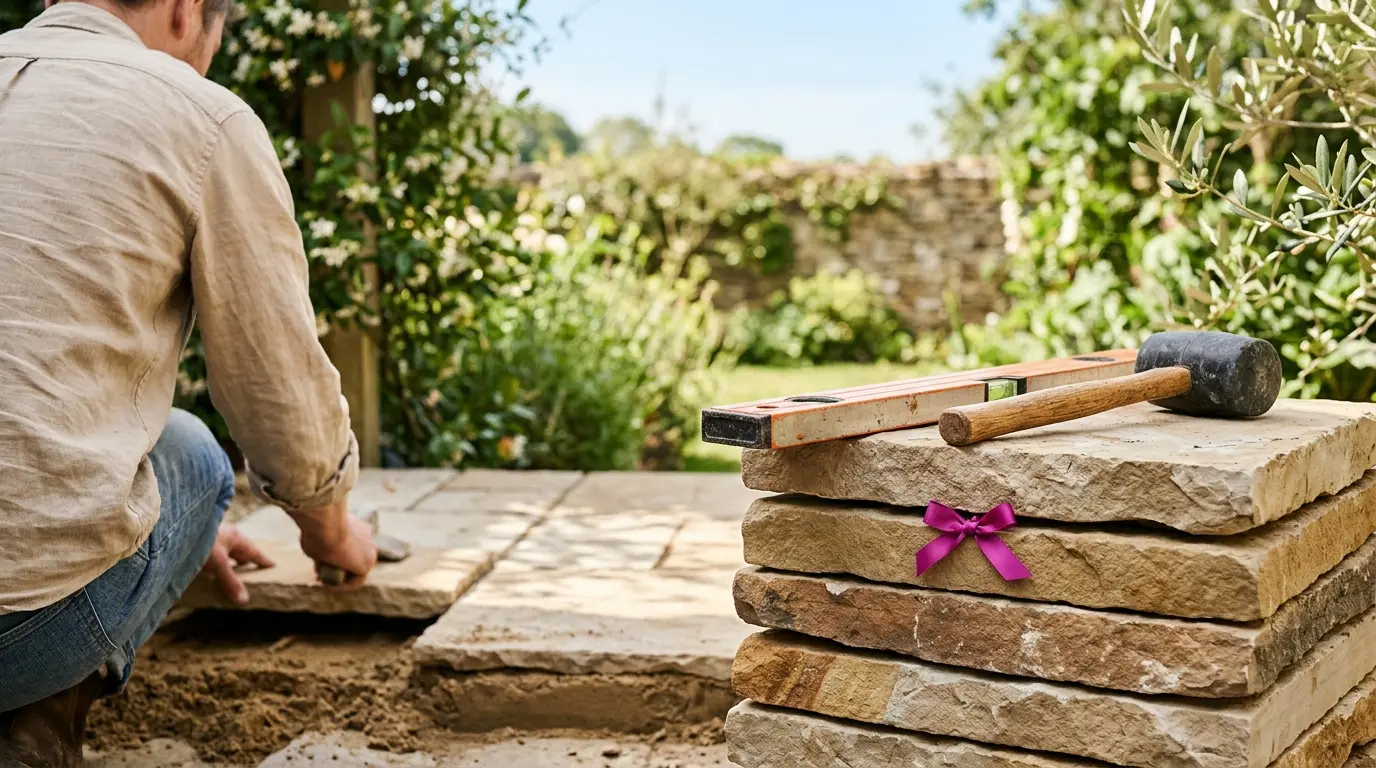
Vague words give an AI nothing to match. 'Outdoor solutions' could be anything. 'Paver patios and retaining walls in Tampa' is clear.
Go through your site and replace the vague lines with specific ones: the service, the material, the town.
Show local knowledge
This is where a local landscaper beats a national website. You know your area's soil, weather and plants.
Write a few short pieces on things only a local would know. Which grass copes with your summers. When to seed in your region. What local water rules mean for a new lawn. This is useful to homeowners and it marks you as the local expert.
Related: Landscaping Estimating Software: What to Look For in 2027
Be listed in more than one place
Different AI tools pull from different sources. Do not rely on Google alone.
- Google Business Profile.
- Bing Places for Business.
- Apple Business Connect.
- Yelp and Facebook, with matching details.
A simple order to do it in
- 01Fix your Google profile and make your details match everywhere.
- 02Rewrite your home page so it says plainly what you do and where.
- 03Add a questions section with real answers.
- 04Build a steady flow of reviews.
- 05Add one helpful local article a month.
Common questions
- Do I need special software for GEO?
- No. Start with the basics above. Tools can come later if you want to track things, but they do not replace a clear site and good reviews.
- Will AI search replace Google?
- Nobody knows yet. Many people use both. The safe move is to do the things that help in both places, which is what this guide covers.
That landscaper got lucky once. You do not have to rely on luck. The things that make an AI mention you are not mysterious. Be clear. Be specific. Be local. Be well reviewed. Be listed in more than one place.
Do that, and the next time a homeowner asks their phone who to call, there is a good chance the answer is you.
Want this set up for your landscaping business? Ask for a free demo and see it before you pay anything.
Topics
- generative engine optimization
- GEO for local business
- AI search optimization for landscapers
- how to do generative engine optimization
- AI search for small business
Keep reading
Landscaping / Nov 2, 2026
Missed Calls in the Spring Rush: What Landscapers Can Do in 2027
Spring fills your year. It is also when you miss the most calls. Here is how to stop losing them.
3 min read
Landscaping / Nov 5, 2026
What to Ask on a Landscaping Quote Call in 2027
Five questions that tell you if a job is worth the drive, before you get in the truck.
3 min read

Landscaping / Nov 10, 2026
How Following Up Wins More Landscaping Quotes in 2027
Many quotes are lost only because nobody asked again. A simple follow-up plan fixes that.
3 min read

Landscaping / Oct 18, 2026
7 Conversion Tips for a Landscaper's Website in 2027
Getting visitors is half the job. These seven changes turn more of them into quote requests.
4 min read