
Roofing CRM: What a Small Roofing Company Really Needs in 2027
You do not need a giant system. You need to know where every job stands. Here is the short list.
Nov 10, 2026 / 3 min read / Custom software

A roofer is driving to a job when his phone rings. 'Hi, it is Mrs Alvarez. You came out three weeks ago about our roof? We have been waiting to hear back.'
His stomach drops. He remembers the house. He remembers saying he would send the estimate. He cannot remember what happened after that. He thinks it is on a notepad in the other truck.
He apologises and promises to send it tonight. But she has already called someone else, just to compare. A good job, on a nice street, slipping through his fingers because of a notepad.
That is what a CRM prevents. The letters stand for customer relationship management. Ignore them. It is simply one place where every lead and every job lives, so nothing gets lost.
The trouble is that most roofing software is built for big companies. Here is what a small roofer actually needs.
The must-haves
- Every lead in one list, the moment it comes in.
- A clear stage for each job.
- Notes and photos attached to the job.
- A reminder when something has been waiting too long.
That is it. If a tool does those four things well, it will change how you work.
Stages that match how you work
A roofing job moves through steps. A simple set looks like this:
- 01New lead.
- 02Inspection booked.
- 03Estimate sent.
- 04Sold.
- 05Scheduled.
- 06Done.
- 07Paid.
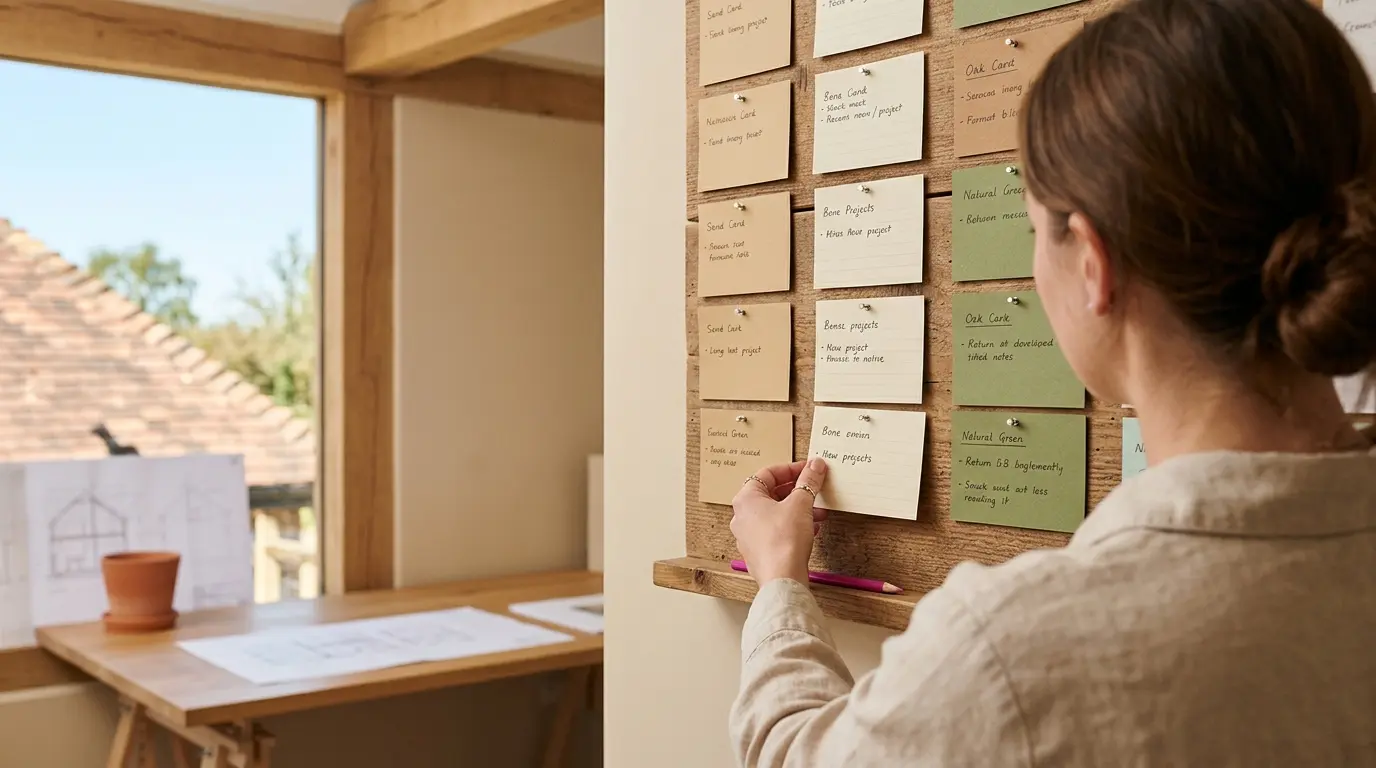
At a glance you can see how many jobs are at each step, and which ones are stuck.
Related: Follow-Up for Roofing Quotes and Insurance Jobs in 2027
Insurance jobs need one extra thing
Claims are where jobs get lost for weeks. You need a place to note the adjuster's name, the dates, and what was approved.
Without it, you end up phoning the homeowner to ask what the insurer said, which does not look good.
What you can skip
Big roofing systems come loaded with features. Most small companies never use them, and they make the tool slow and hard to learn.
If your crew will not use it because it is too complicated, it is worth nothing. Simple and used beats powerful and ignored.
Related: How to Get ChatGPT to Recommend Your Roofing Company in 2027
Ready-made or built for you
If a ready-made roofing CRM fits how you work, use it. If you find yourself bending your business around the software, a simple tool built for your company can cost less over time and will match you exactly.
Common questions
- Can I just use a spreadsheet?
- For a very small operation, yes, for a while. The problem is that a spreadsheet does not remind you of anything. Jobs still get forgotten.
- How long does it take to start using a CRM?
- A simple one can be up and running in a day. The harder part is the habit: every lead goes in, every time. Give it two weeks and it becomes automatic.
Mrs Alvarez waited three weeks for an estimate that was sitting on a notepad in the wrong truck. She was ready to hire. All she needed was for somebody to remember her.
A roofing CRM is not about technology. It is about never having that phone call again. Every lead in one place, every job at a clear stage, and nothing left to memory.
We do this for local businesses every week. If it would help, we can show you a demo made for your roofing company.
Topics
- roofing CRM
- roofing software
- best CRM for roofers
- roofing business software
- roofing job tracking
Keep reading

Roofing / Oct 16, 2026
How to Get Roofing Leads Without Buying Them in 2027
Bought roofing leads are shared with other roofers. Here is how to get leads that only call you.
4 min read
Roofing / Oct 19, 2026
Best Online Practices for Roofing Companies in 2027
A plain checklist of what a roofing company should have in place online this year, and why each one matters.
3 min read

Roofing / Oct 24, 2026
Google Business Profile Tips for Roofers in 2027
After a storm, the map is where homeowners look first. Here is how to make sure you are on it.
3 min read

Roofing / Oct 31, 2026
Best AI Answering Service for Roofers: What Actually Matters in 2027
Before you pick an AI answering service, check these five things. They decide if it wins you jobs.
3 min read