
How Fast Should You Respond to a Landscaping Lead From Your Website
The first landscaper to respond usually gets the job. Here is how to be that landscaper.
Nov 22, 2026 / 5 min read / 24/7 receptionist
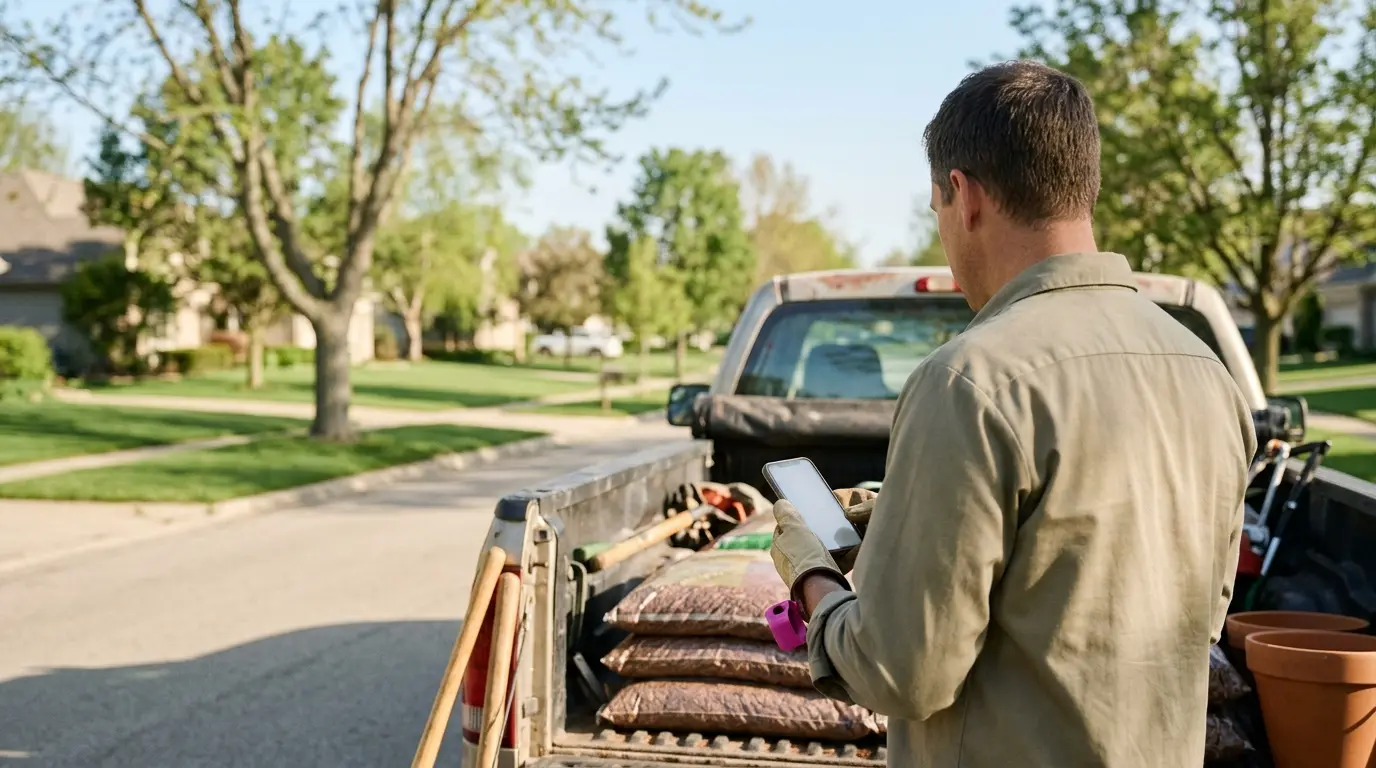
Two landscapers in the same town get the same lead at the same time. A homeowner named David submitted a form on a directory site, and both received the notification.
Mike sees it pop up on his phone while he is loading mulch. He steps aside, calls David, and they are talking within four minutes. David describes the job, Mike books a visit for Thursday, and David feels good about it.
Jason is on a mower. He sees the missed call notification at six that evening and calls back the next morning. David answers politely. 'Thanks for calling, but I already found someone yesterday.' Jason never had a chance. He just did not know it yet.
When someone fills in a form on your website, a timer starts. They are interested right now. They are probably also looking at other landscapers. The question is whether you reach them while they still care, or after they have already booked someone else.
Response time is one of the simplest things in your business to improve, and one of the most valuable. Here is what matters and how to set it up so it happens without you thinking about it.
Why the first response wins
When a homeowner sends a quote request, they are in buying mode. They are standing in their yard, or sitting on the couch, thinking about the project. That energy fades fast.
If you call back while they are still thinking about their yard, you catch them at the best possible moment. If you call back the next day, they have moved on. They may have already booked someone, or they may have lost the motivation entirely.
Being first also sends a signal. A fast callback says: this is a business that is organised and pays attention. A slow callback says the opposite.
What 'fast' actually means
Within five minutes is excellent. Within an hour is good. The same day is acceptable. The next day is usually too late.
That may sound extreme, but think about it from the customer's side. They filled in three forms. The first landscaper to call back gets a full conversation. The second gets a shorter one. The third gets 'sorry, I already found someone.'
Related: How to Get More Google Reviews for Your Landscaping Company in 2027
The problem with being on a job site
This is the hard part. You cannot answer the phone with a hedge trimmer in your hand. You cannot call back when you are waist-deep in a drainage trench.
The leads that come in between eight and five are the most valuable, and those are exactly the hours you are working. That is why response time is a systems problem, not a willpower problem.
Set up instant notifications
Every form submission should send you a notification you will actually see. Not just an email that sits in your inbox between newsletters.
- A text message with the lead's name and what they need.
- A push notification from your website or CRM.
- A notification in whatever app you check most often.
The goal is that you see it within minutes, even on a job site.
Related: Missed Calls in the Spring Rush: What Landscapers Can Do in 2027
Build a quick-response system
You do not need to have a full conversation right away. You just need to make contact. Here is a simple plan:
- 01Get the notification.
- 02Within five minutes, send a short text.
- 03Book a time to call them properly, either at lunch or end of day.
Words you can use
Hi David, this is Mike from Green Edge Landscaping. I just got your message about the backyard. I am on a job right now but I will call you at noon today to talk about it.
That text takes fifteen seconds and it puts you ahead of every landscaper who waits until evening.
Let something answer when you cannot
The ultimate version of fast response is instant response. If your phone is answered on the second ring, every time, you never lose a lead to a missed call.
An AI receptionist or an answering service can do this. The caller gets a real conversation, their details are taken, and a visit is booked. You get a summary when you are ready.
For landscapers in the busy season, this is often the single change that brings the most new jobs.
Track your response time
Check your form submissions for the past month. For each one, look at when it came in and when you first responded. Be honest.
If the average is more than a few hours, that is where your lost jobs are hiding. You do not need more leads. You need to respond to the ones you have.
Common questions
- Is it okay to text instead of call?
- Yes. Many people prefer a text, especially during the work day. A quick text that says you got their message and will call soon is better than a missed call and no message.
- What if I get a lead at night or on a weekend?
- A text or auto-reply within a few minutes still helps. It tells the person their message was received. Then call first thing the next morning.
- Does response time matter for repeat customers?
- Less so, because they already know and trust you. But it still matters for how professional you feel. A current customer who cannot reach you may start looking elsewhere.
- What if I am a one-person operation and cannot always respond fast?
- That is exactly when a system matters most. An auto-text, an answering service, or even a voicemail that sets expectations can bridge the gap until you are free.
Think about the last time you called a business and nobody picked up. How long did you wait before calling the next one? Your customers are no different.
Speed to lead is not about being pushy. It is about being there. When someone reaches out for help with their yard, they want to talk to a person, today. The landscaper who shows up first, even if it is just a text, is the one who gets the job. That part of the business costs nothing. It just takes a plan.
We do this for local businesses every week. If it would help, we can show you a demo made for your landscaping business.
Topics
- lead response time
- speed to lead
- how fast respond web lead
- landscaping lead follow up
Keep reading

Landscaping / Oct 28, 2026
AI Search for Landscapers: A Simple GEO Guide for 2027
GEO means being the business an AI answer mentions. Here is the short, no-jargon version.
3 min read
Landscaping / Oct 30, 2026
AI Receptionist for Landscapers: Is It Worth It in 2027?
You cannot answer with a mower running. Here is how to work out if a receptionist would pay for itself.
4 min read
Landscaping / Nov 4, 2026
What to Ask on a Landscaping Quote Call in 2027
Five questions that tell you if a job is worth the drive, before you get in the truck.
3 min read
Landscaping / Nov 12, 2026
5 Numbers Every Landscaping Business Should Track in 2027
You do not need a big report. Five numbers tell you how the business is really doing.
3 min read